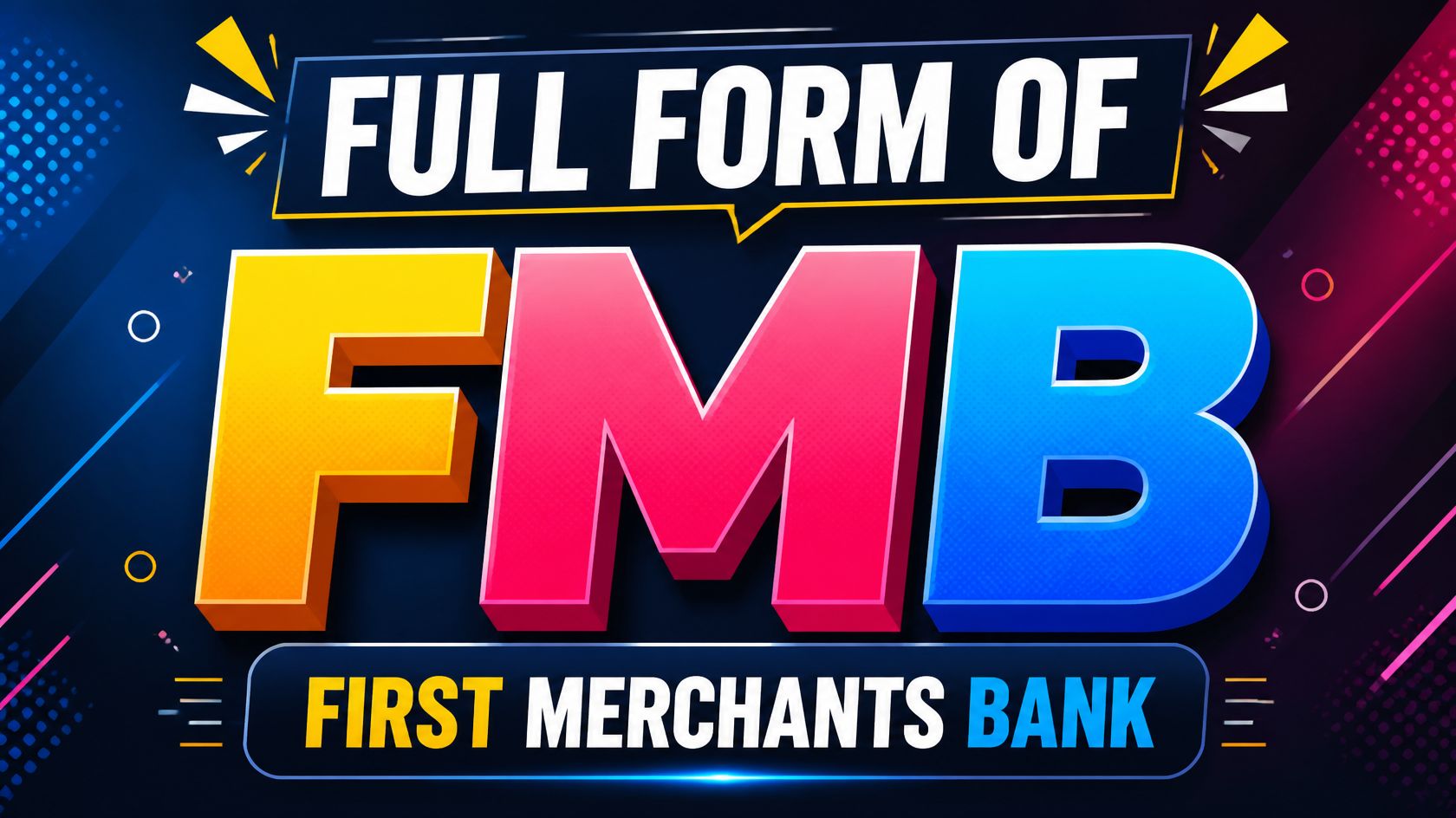

FMB is a common abbreviation that you may see in text messages, social media comments, and online conversations. In many social media contexts, FMB means “Follow Me Back.” People use it when they want someone to follow their account after they have followed them. It is a quick way to request a mutual connection without typing a complete sentence.
However, FMB can have different meanings depending on the situation. Its meaning may change in professional documents, technical discussions, or private conversations. Understanding the context helps you interpret the abbreviation correctly.
In this guide, you will learn what FMB means in text, how people use it on social media, where it originated, and how to respond when someone sends it to you. You will also discover similar abbreviations, practical examples, and answers to frequently asked questions.
Meaning & Definition
FMB usually stands for “Follow Me Back” in casual online communication. It is an abbreviation created from the first letters of the phrase. People use it to ask someone to follow their social media account in return.
For example, imagine that someone follows your Instagram profile and then sends you a message saying, “FMB please.” They are asking you to follow their account as well. The request is usually informal and relates to gaining followers or building connections online.
FMB is not a universal abbreviation with only one definition. Its meaning depends on the platform, conversation, and subject being discussed. In social media messages, “Follow Me Back” is a likely interpretation. In technical or business documents, the same letters may represent something entirely different.
What Does FMB Mean in Text?
When someone uses FMB in a text message, they often mean “Follow Me Back.” This expression is especially common in conversations about social media profiles, followers, and online engagement.
People use the abbreviation because it is short and easy to type. Instead of writing a complete request, they can simply send FMB. However, not everyone understands internet slang, so the abbreviation may confuse someone who has never encountered it before.
Here are some examples of how FMB appears in messages:
- “I followed your account. FMB!”
- “Hey, FMB if you like my content.”
- “New profile here. Looking for followers, FMB.”
- “Thanks for the follow. I will check out your page.”
- “What does FMB mean? I keep seeing it online.”
In the first three examples, FMB means “Follow Me Back.” The final example asks about the abbreviation itself. The surrounding words help explain the intended meaning.
If you receive an FMB message and are unsure what the sender means, ask them to clarify. A short question can prevent misunderstandings.
Background / Origin
FMB developed as part of the wider culture of internet abbreviations. As online communication became more popular, people started shortening everyday phrases to save time and space. This trend created expressions such as LOL, BRB, BTW, and many other forms of digital shorthand.
The growth of social media also made follower counts an important part of online interaction. Users began asking others to follow their profiles in return. The phrase “Follow Me Back” was easy to shorten to FMB, making it convenient for comments, captions, and direct messages.
There is no widely established record identifying the exact person or date responsible for creating FMB. Like many internet abbreviations, it appears to have developed through informal use rather than a formal language system.
Today, the abbreviation is most relevant in online communities where people discuss followers and profile growth. Its meaning can still vary between different platforms and professional fields.
Usage in Different Contexts
FMB is mainly used in informal communication. Its meaning becomes clearer when you consider the conversation in which it appears.
For example, a message containing FMB alongside words such as “Instagram,” “profile,” or “followers” probably refers to a request for a return follow. In contrast, FMB in a technical report may refer to a specific term used in that industry.
Before interpreting or using the abbreviation, consider the audience and subject. Clear communication is especially important when the reader may not be familiar with online slang.
General Usage
In everyday online conversations, FMB is generally used to request a mutual follow. Someone may use it after following a new account or discovering a creator whose content they enjoy.
Common situations include:
- Asking a new follower to follow back.
- Connecting with people who share similar interests.
- Promoting a personal or business profile.
- Participating in follow-for-follow activities.
- Encouraging people to discover a new account.
Although FMB can make a request shorter, adding a friendly sentence can make it sound more natural. For example, “I just followed your photography page. Feel free to follow back if you enjoy my work” is polite and easy to understand.
Formal vs Informal
FMB is generally appropriate for casual messages, social media comments, and friendly conversations. It is not usually suitable for professional emails, academic assignments, or formal reports.
In professional writing, abbreviations should be clear to the intended audience. If an acronym is necessary, explain its meaning the first time you use it.
| Communication type | Is FMB suitable? | Better approach |
| Social media comments | Yes, in the right context | Use FMB or write the full phrase |
| Messages to friends | Usually | Keep the tone natural |
| Business emails | Usually not | Use clear, complete sentences |
| Academic writing | Generally not | Define technical terms properly |
| Technical documents | Depends on the field | Follow the document’s terminology |
Using the full phrase is often the safest option when clarity matters more than brevity.
FMB Meaning on Social Media Platforms
FMB commonly means “Follow Me Back” on platforms where users follow accounts and creators. It may appear in Instagram comments, TikTok messages, X posts, Snapchat conversations, or other online spaces.
On Instagram, users might write FMB after following someone else’s profile. On TikTok, the abbreviation may appear in comments where creators want to connect with more users. Similar requests can appear on other platforms that support followers.
FMB is also associated with follow-for-follow activities. In these exchanges, users agree to follow one another to increase their follower counts. While this approach may increase numbers, it does not necessarily create meaningful engagement.
Keep these points in mind when using FMB on social media:
- Use it only when a follow request fits the conversation.
- Avoid repeatedly posting it under unrelated content.
- Do not pressure people to follow your account.
- Focus on connecting with users who genuinely enjoy your content.
- Respect other people’s choices if they do not follow you back.
A larger follower count does not always mean better engagement. Building genuine connections can be more valuable than collecting followers who have little interest in your posts.
Other Meanings in Different Fields
Although FMB often means “Follow Me Back” in social media conversations, the abbreviation can represent other terms in different fields.
For example, in some land surveying and property-record contexts in South Asia, FMB can refer to a “Field Measurement Book.” This is related to recorded land measurements and is entirely different from internet slang.
FMB may also appear as initials in company names, financial institutions, organizations, or internal business systems. These meanings depend on the specific document or industry.
| Context | Possible meaning | How to interpret it |
| Social media | Follow Me Back | Look for references to profiles or followers |
| Land surveying | Field Measurement Book | Check for references to land measurements |
| Business | Organization-specific abbreviation | Review the company’s terminology |
| Private conversations | A personal or community-specific meaning | Ask the sender for clarification |
These are contextual examples, not a complete list of every possible definition. If FMB appears in an unfamiliar setting, check the surrounding information before deciding what it means.
Examples of FMB in Sentences
Examples make it easier to understand how FMB works in real conversations. The following sentences show common ways people may use the abbreviation.
- “I followed your account yesterday. FMB when you get a chance.”
- “Your travel videos are great. I followed you, so FMB if you want.”
- “I have created a new page for my artwork. FMB!”
- “We are connecting with other small businesses today. FMB if you’re interested.”
- “Someone commented FMB on my post. What does it mean?”
The first four examples use FMB as a request for a return follow. The fifth example asks about its definition.
You can also replace FMB with a complete sentence to make your meaning clearer. For instance, “I followed your page. Would you like to follow me back?” sounds friendly and direct.
The best wording depends on your relationship with the recipient. A brief abbreviation may work well with people who understand social media slang. A complete sentence is usually better when communicating with new contacts.
Common Misconceptions
Several misunderstandings can occur when people encounter FMB online.
Misconception 1: FMB always means Follow Me Back.
This is a common meaning in social media conversations, but other industries may use the same abbreviation differently. Always consider the context.
Misconception 2: Everyone understands FMB.
Not everyone uses internet slang. Some people may not recognize the abbreviation, especially if they rarely use social media.
Misconception 3: FMB means someone must follow you.
FMB is a request, not an obligation. Users can decide which accounts they want to follow.
Misconception 4: FMB and FBM mean the same thing.
They are different abbreviations. In e-commerce, FBM can mean “Fulfilled by Merchant,” which refers to a seller handling order fulfillment. It is unrelated to the social media request FMB.
Understanding these differences helps you avoid confusion and communicate more effectively online.
Similar Terms & Alternatives
Several abbreviations appear in conversations about social media engagement. Although some are related to FMB, they have different meanings.
| Abbreviation | Full meaning | Common purpose |
| FMB | Follow Me Back | Requesting a return follow |
| F4F | Follow for Follow | Offering mutual follows |
| L4L | Like for Like | Exchanging likes |
| PFB | Please Follow Back | Politely requesting a follow |
| FBM | Fulfilled by Merchant | Describing seller-managed fulfillment in e-commerce |
FMB and F4F are closely related. FMB asks someone to follow back, while F4F usually describes a mutual arrangement in which both users follow each other.
L4L focuses on likes rather than followers. PFB expresses a similar request to FMB but makes the wording more explicit. FBM, however, has a different meaning in online selling.
If you want to avoid confusion, use plain language. A sentence such as “Would you like to follow each other?” explains your intention without relying on abbreviations.
How to Respond to FMB When Someone Uses It
Your response to FMB depends on the situation and whether you want to follow the sender. You do not have to follow someone simply because they request it.
If you are interested in the person’s content, you can visit their profile and decide whether to follow them. If you are unsure about the abbreviation, ask what it means.
Here are some possible replies:
- “Sure, I’ll check out your profile.”
- “Thanks for following me!”
- “What do you mean by FMB?”
- “I’ll take a look at your content first.”
- “Thanks, but I only follow accounts that interest me.”
- “I’m not participating in follow-for-follow right now.”
Choose a reply that matches your intentions. You can be polite without agreeing to a request.
If someone repeatedly pressures you to follow them, you can ignore the messages or use the platform’s available privacy and blocking tools. You should never feel obligated to interact with an account that makes you uncomfortable.
Difference Between FMB and Similar Terms
FMB, F4F, L4L, and PFB are often used in similar online spaces, but they do not communicate exactly the same thing.
FMB asks someone to return a follow. F4F generally describes an exchange in which two users agree to follow one another. L4L refers to reciprocal likes, while PFB means “Please Follow Back.”
Consider these examples:
| Term | Example | Meaning |
| FMB | “I followed you. FMB?” | Asking for a return follow |
| F4F | “Anyone interested in F4F?” | Offering a mutual follow exchange |
| L4L | “L4L on our latest posts?” | Suggesting reciprocal likes |
| PFB | “PFB if you enjoy my content.” | Politely asking for a follow back |
The main difference is the action each abbreviation describes. Some focus on followers, while others focus on likes or mutual engagement.
Choosing the right term makes your message easier to understand. When talking to someone unfamiliar with internet slang, explain your request instead of assuming they know the abbreviation.
Relevance in Online Conversations & Dating Apps
FMB is mainly associated with social media interactions, but you might also encounter it during conversations that begin on dating apps.
For example, someone you meet on a dating platform may ask you to follow their Instagram profile. If they mention FMB in that context, they may be asking you to follow them back.
However, FMB is not a reliable sign of romantic interest. The abbreviation alone does not tell you whether someone is flirting, seeking friendship, promoting an account, or simply trying to gain followers.
Pay attention to the surrounding conversation. If you are unsure, ask the person what they mean. You can also choose whether to share your social media account or continue chatting on the original platform.
Protecting your privacy is important when communicating with people online. You are free to decline a request, keep your accounts private, or stop a conversation if it makes you uncomfortable.
Frequently Asked Questions
What does FMB mean in text messages?
FMB usually means “Follow Me Back” when the conversation involves social media accounts, followers, or profiles. Its meaning can vary depending on the context.
What does FMB mean on Instagram?
On Instagram, FMB commonly means “Follow Me Back.” People use it to ask someone to follow their profile after they have followed them.
What does FMB mean on TikTok?
On TikTok, FMB often means “Follow Me Back.” It may appear in comments or messages where users want to connect with other accounts.
How should I reply when someone texts FMB?
You can check the person’s profile and follow them if you are interested. If you do not understand the abbreviation, ask, “What do you mean by FMB?”
Is FMB the same as F4F?
No. FMB asks someone to return a follow, while F4F usually refers to an arrangement where two users agree to follow each other.
Can FMB have a different meaning?
Yes. FMB can represent other terms in technical documents, business settings, or private conversations. The surrounding context helps identify the correct meaning.
Is FMB appropriate for professional messages?
FMB is generally informal and is best avoided in professional messages unless the abbreviation has a specific, understood meaning. Clear wording is usually more appropriate.
Conclusion
FMB most commonly means “Follow Me Back” in social media conversations. It is a short way to ask someone to follow an account in return. Users may write it in comments, direct messages, captions, or discussions about growing their online audience.
However, the abbreviation does not have the same meaning in every situation. Other fields may use FMB for different terms, so it is important to consider the subject and surrounding words before interpreting it.